


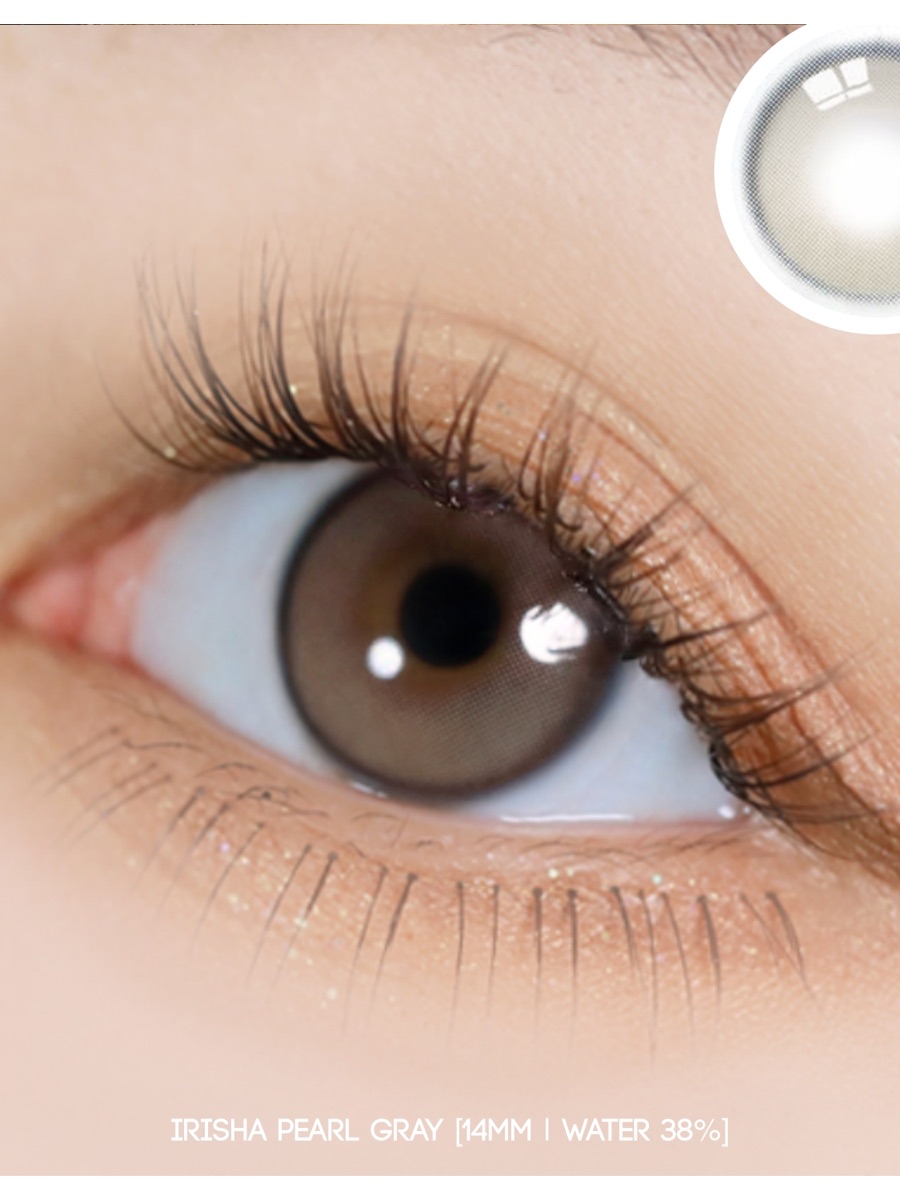
Two numbers on every lens listing get confused constantly. Total diameter and graphic diameter measure different things and answer different questions, so the honest answer to "which matters more" is that they matter for different reasons.
Total diameter — how it fits
Total diameter, usually written DIA, is the full physical width of the lens, edge to edge. Most soft lenses sit between 14.0mm and 14.5mm. This is a fitting measurement: it decides how the lens sits on your cornea, how it moves when you blink, and how comfortable it is over a full day.
You cannot see total diameter when the lens is worn — the outer edge sits under your eyelids. A 14.5mm lens does not look bigger than a 14.2mm one. It fits differently.
Graphic diameter — how it looks
Graphic diameter, written G.Dia, is the width of the printed coloured area. This is the number that decides the effect. It is always smaller than the total diameter, because the outer ring of every lens is left clear so it can sit against the eye properly.
| Graphic diameter | Effect |
|---|---|
| 12.5mm and below | Natural — colour without visible enlargement |
| 12.8mm to 13.2mm | Subtle lift; the eye reads slightly larger |
| 13.4mm and above | Dolly — clearly enlarged, obvious as a lens |
So which do you check?
If you are choosing between shades of a lens you already wear comfortably, graphic diameter is the number to compare — it is the only one that changes the look.
If you are moving to a new brand or a lens has ever felt tight, scratchy or over-mobile, total diameter is the one to watch. A change of even 0.3mm in total diameter can change how a lens feels, while looking identical.